
A Small Restaurant in a Neighborhood Looking Toward Its Future
Machiya Ramen is part of a changing Montreal Chinatown where historic preservation, public-space improvements, housing initiatives, and new independent businesses are shaping the neighborhood's next chapter. Rather than focusing only on ramen, this article explores how a small restaurant can contribute to everyday urban life through walkability, local activity, and connections between visitors, workers, students, and community members. Located near pedestrian spaces and Place Sun Yat-Sen, Machiya Ramen represents a quieter form of change within a historic district: bringing contemporary daily activity into a neighborhood while allowing its established identity to continue evolving. As Montreal's Chinatown looks toward the future, independent restaurants like Machiya can become part of the neighborhood's ongoing story simply by giving people another reason to stop, eat, walk, and spend time there.
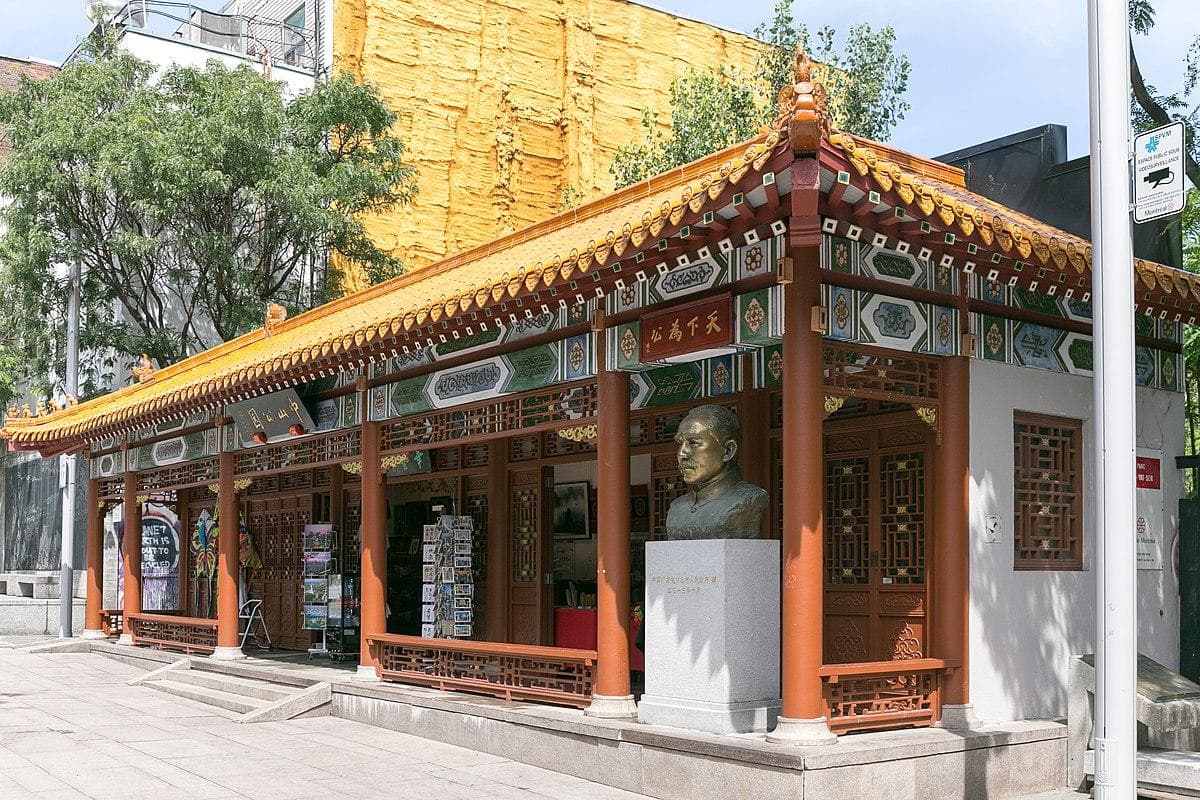
In a city, neighborhoods are rarely defined by one type of business or one moment in history. They are shaped by the everyday places where people stop, meet, eat, walk, and return. In Montreal’s Chinatown, that process is particularly visible today. The neighborhood is balancing its historic identity with new investment, public-space improvements, housing initiatives, and the arrival of newer independent businesses.
Machiya Ramen is one of those businesses.
Located at 1023 Rue Clark, the small restaurant is part of a Chinatown that is not simply preserving its past, but actively considering what its next chapter should look like. That makes a visit to Machiya about more than finding a place for a meal. It can also be a way of experiencing how a historic downtown neighborhood continues to function as a living community.
Independent Businesses Matter in a Changing Neighborhood
Machiya Ramen is an independent restaurant rather than a large chain. That distinction matters in an urban neighborhood where the character of individual storefronts contributes to the identity of the street.
Large developments can change a city's physical landscape quickly. Small restaurants change it differently. They give people a reason to walk down a particular block, stop in a particular area, and become familiar with a place through repeated everyday experiences.
For a neighborhood like Chinatown, independent businesses are part of that continuity.
The restaurant's own public history is still relatively undocumented, so there is no need to invent a dramatic origin story for Machiya. Instead, its current role is easier to understand: it is a small food business operating within a neighborhood that is itself going through a period of transition.
That is an important distinction. A community does not remain alive simply because historic buildings survive. It also needs places where people continue to spend ordinary time.
Eating in a Walkable Part of Downtown Montreal
One of the most interesting characteristics of this part of Montreal is the relationship between restaurants and pedestrian movement.
De la Gauchetière is a pedestrian street through Chinatown, while Clark connects the neighborhood with surrounding downtown destinations. The area is also within walking distance of Place-d'Armes metro station and sits close to major destinations such as the Palais des congrès and the downtown university areas.
This creates a different kind of restaurant experience from one based entirely on driving to a destination.
Someone may arrive in the neighborhood for a conference, pass through Chinatown while exploring Old Montreal, walk from a university campus, or simply spend an afternoon downtown. A restaurant becomes part of that movement through the city.
Machiya Ramen fits naturally into this rhythm.
A meal can be a destination, but it can also be one stop during a larger day in Montreal. That connection between food and movement is one reason independent restaurants can contribute so much to the character of walkable urban districts.
Public Spaces Give Restaurants a Larger Context
Restaurants do not exist in isolation from the streets around them.
Near Machiya Ramen is Place Sun Yat-Sen, a public gathering space at the intersection of Clark and de la Gauchetière. Public spaces like this give a neighborhood places to pause between destinations. They also help transform a commercial district from a collection of storefronts into somewhere people can spend time.
That relationship is particularly important in a neighborhood experiencing renewal.
Montreal has recently been taking steps to improve Chinatown's public realm and long-term conditions. Plans include new housing initiatives, community-led design work, public-space improvements, and a broader revitalization strategy. In August 2026, the Ville-Marie borough also launched a long-term revitalization effort involving a 24/7 cleaning brigade and the creation of an Alliance for Chinatown.
For restaurants, these changes are not abstract urban-planning concepts. Better public spaces, stronger pedestrian connections, and continued neighborhood activity can influence how people experience a business before they even walk through its door.
A Neighborhood Can Preserve History Without Becoming Frozen in Time
Montreal's Chinatown received formal heritage protection in 2023, covering ten historic buildings in the institutional core of the neighborhood. The designation followed years of debate about development, demolition, housing, and the future of the area.
Heritage protection is often discussed as a way to preserve what already exists. But there is another side to the idea.
A historic neighborhood also needs a present.
If streets become museums rather than places where people live, work, eat, and gather, preservation alone cannot sustain a community. New businesses can therefore have a role in a historic district precisely because they bring contemporary daily activity into an established environment.
Machiya Ramen represents that quieter form of change.
It does not need to replace the identity of Chinatown to become part of it. Instead, a Japanese restaurant can operate alongside Chinese businesses, community institutions, historic buildings, pedestrian spaces, and newer projects. The result is a neighborhood that reflects both its history and the people who use it today.
Food Businesses Help Create Everyday Connections
The value of a neighborhood restaurant is not always measured by how far people travel to visit it.
Sometimes its importance is much simpler.
A restaurant gives people a reason to stop. It creates a familiar storefront. It adds activity to a street during the middle of the day and into the evening. It provides a place where different groups of people can overlap without necessarily having anything else in common.
In Chinatown, that mixture is especially relevant because the neighborhood serves more than one audience. Longtime community members, downtown workers, students, visitors, conference attendees, and people arriving from other parts of Montreal can all move through the same relatively compact area.
Machiya Ramen sits within that overlap.
Its customers do not have to share the same reason for being in Chinatown. One person may be looking for lunch after work, another may be exploring the neighborhood, while someone else may have come specifically to eat. What they share is the same physical environment.
That is one of the less visible ways restaurants participate in urban life.
The Next Chapter of Chinatown Is Still Being Written
Montreal's Chinatown has already experienced enormous change. Parts of the historic neighborhood were lost during major redevelopment projects in the second half of the twentieth century, while later generations of immigrants brought new businesses, cuisines, and cultural influences.
Today, the conversation is different.
The question is not simply how to preserve what remains. It is how to make sure the neighborhood continues to function as a place for people.
Housing, heritage, public space, commercial activity, and community organizations are all part of that discussion. The Chinatown Action Plan contains strategies addressing housing, business vitality, public space, and cultural heritage, while more recent revitalization efforts are attempting to turn those priorities into visible changes on the ground.
Small businesses are part of that equation because neighborhoods are experienced at street level.
A plan may define a district on a map, but people experience it through sidewalks, storefronts, parks, restaurants, shops, and the simple decision to stay for another few minutes.
Why a Small Restaurant Can Matter
Machiya Ramen is not a symbol that needs to represent all of Montreal's Chinatown. It is simply one independent restaurant operating within it.
That may be exactly what makes its presence interesting.
The future of a historic neighborhood is rarely determined by one grand project. It is built through many smaller decisions: which storefronts remain open, which new businesses arrive, how public spaces are used, whether people continue to walk through the area, and whether visitors feel encouraged to stay rather than simply pass through.
A bowl of ramen is only one part of that experience.
The larger story is the neighborhood around it — a historic district protecting its buildings, improving its public spaces, addressing housing needs, welcoming new businesses, and trying to remain useful to the people who live, work, study, and spend time there.
That is the environment in which Machiya Ramen operates today.
And as Montreal's Chinatown enters another chapter, small independent restaurants like Machiya have the opportunity to become part of its everyday future, one ordinary visit at a time.
Visit Machiya Ramen:machiyaramen.hiraccoon.com
Keep reading
Order from
Montréal, QC · Japanese Ramen · Donburi · Gyoza