
A Bowl of Ramen on Clark Street: Discovering Machiya Ramen in Montréal’s Chinatown
Located in the heart of Montréal’s historic Chinatown, Machiya Ramen brings authentic Japanese ramen culture to Clark Street. Featuring rich tonkotsu broth, handmade-style dishes, and a neighborhood-focused atmosphere, the restaurant connects Japanese culinary tradition with the multicultural history of Montréal’s Chinatown. More than a place for ramen, Machiya Ramen represents the evolving story of food, community, and cultural exchange.
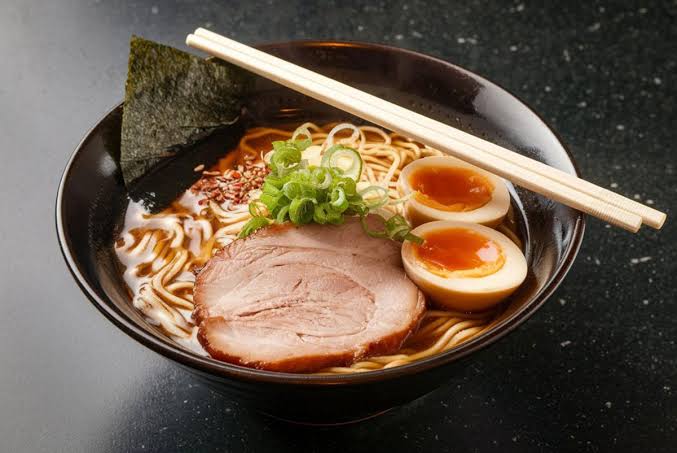
On Clark Street, just steps from Place Sun Yat-Sen, one small restaurant sits inside one of Montréal’s most historically layered neighborhoods.
At 1023 Rue Clark, in the heart of Montréal’s Chinatown, Machiya Ramen serves Japanese ramen in a setting where the history of food, immigration, small businesses, and neighborhood life has been unfolding for more than a century.
That makes a bowl of ramen here worth considering as more than just lunch.
It is part of the story of the neighborhood around it.
A Small Ramen Shop in the Heart of Chinatown
Machiya Ramen is a compact restaurant with counter and table seating, located near the corner of Clark Street and de la Gauchetière. The shop has the feel of a neighborhood restaurant rather than a destination built around spectacle.
Listings and customer reviews describe it as family-run, quick, affordable, and notably clean — qualities that fit naturally with the rhythm of a busy urban neighborhood.
The restaurant's menu centers on tonkotsu ramen, with pork-bone broth prepared daily. Diners can choose from standard tonkotsu, black tonkotsu finished with dark garlic oil, shoyu, miso, and tomato ramen. The menu also includes donburi rice bowls, gyoza, and tempura.
The restaurant says its broth is made from 100% pork bones and prepared without MSG.
There is something fitting about that straightforward approach.
In a neighborhood where small shops, restaurants, groceries, and family businesses have long formed the backbone of Chinatown, Machiya Ramen feels like the kind of place designed to serve people who live, work, shop, and spend time nearby.
Why Clark Street Matters
To understand the location of Machiya Ramen, it helps to look beyond the restaurant itself.
Montréal's Chinatown dates back to the late 19th century. Chinese migrants began arriving in Montréal in the 1870s, and by the late 19th and early 20th centuries, businesses had concentrated around the streets that became the historic core of Chinatown.
Clark Street is particularly important to that history.
When Montréal formally defined Chinatown in 1902, the neighborhood was described in relation to de la Gauchetière and Clark. In other words, the street where Machiya Ramen now operates was part of the physical boundaries of the neighborhood from its early days.
The reasons businesses settled here were practical as much as cultural. Small lots, relatively affordable rents, and proximity to Saint-Laurent Boulevard helped make the area a natural place for independent businesses.
That history is still visible today.
Walk through the neighborhood and the streets tell a story of generations of merchants, restaurants, groceries, community organizations, and changing immigrant communities.
From Chinese Noodles to Japanese Ramen
There is another interesting layer to a ramen shop in Montréal's Chinatown.
Ramen is now widely recognized as a Japanese dish, but its history is deeply connected to Chinese food traditions.
When Yokohama opened to international trade in the 19th century, Chinese migrants brought noodle-making traditions with them. In Japan, versions of the dish were originally known as chūka soba or shina soba — essentially, Chinese-style noodles.
Over time, Japanese cooks developed their own regional styles.
Soy-based shoyu ramen became one tradition. Miso ramen became strongly associated with Hokkaido. And tonkotsu ramen eventually became one of Japan's most recognizable styles.
The history of tonkotsu is particularly fascinating.
The style is associated with Kurume in Fukuoka, where pork bones became the foundation of the broth in the early 20th century. The famously cloudy appearance of tonkotsu broth is commonly linked to an accidental overboiling of pork bones, which emulsified fat and collagen into the liquid.
An accident eventually became a culinary tradition.
Today, that tradition has traveled far beyond Japan.
And now, a restaurant serving tonkotsu ramen operates on a street that has itself been shaped by generations of migration and cultural exchange.
What “Machiya” Means
The restaurant's name adds another interesting connection to Japanese urban history.
A machiya is a traditional Japanese townhouse associated particularly with historic cities such as Kyoto.
The word combines machi, meaning town, with ya, which can refer to a house or shop. Historically, a machiya could serve as both a place of business and a family home.
The architecture was shaped partly by the economics of urban land. In historic Kyoto, narrow street frontage encouraged merchants to build long, deep properties, with commercial activity toward the front and family life further inside.
It is an interesting concept to consider while standing on Clark Street.
Montréal's Chinatown also developed around practical urban realities: modest lots, affordable rents, proximity to major streets, and small businesses operating within compact buildings.
Different cities. Different histories. But a similar relationship between streets, commerce, homes, and community.
A Neighborhood That Has Had to Fight to Stay a Neighborhood
The story of Montréal's Chinatown has not always been easy.
During the 1970s and 1980s, major redevelopment projects resulted in the demolition and expropriation of more than six acres of private property. The neighborhood was physically reduced and increasingly surrounded by larger urban developments.
Yet Chinatown continued to adapt.
New waves of immigration brought new businesses, restaurants, and culinary traditions. Communities from Hong Kong and Vietnamese-Chinese backgrounds contributed to an increasingly diverse food culture.
That means the Chinatown of today is not simply a preserved snapshot of the past.
It is a living neighborhood.
Place Sun Yat-Sen, located at Clark and de la Gauchetière, opened in 1988 and became an important gathering place for festivals, community activities, and later demonstrations. The neighborhood's historic core was formally declared a Québec heritage site in 2023.
That heritage designation matters because it recognizes something residents and businesses have long understood: the value of Chinatown is not only in individual historic buildings, but in the relationship between the streets, businesses, institutions, and people who give the neighborhood its character.
Where Machiya Ramen Fits In
This is where Machiya Ramen becomes an interesting part of the local food story.
The restaurant does not need to claim that it represents all of Chinatown. It doesn't.
Instead, it is one of the newer small businesses occupying a historic commercial landscape — a Japanese ramen shop operating within a neighborhood whose food culture has been shaped by Chinese immigration, Japanese culinary influence, Montréal's changing population, and generations of independent businesses.
That is what makes the location worth noticing.
A bowl of tonkotsu ramen at Machiya Ramen represents a cuisine that itself crossed borders and evolved through cultural exchange. The restaurant then places that tradition inside another neighborhood shaped by migration and adaptation.
The result is a very Montréal kind of food story.
Ramen for the Neighborhood
At the end of the day, Machiya Ramen is still a restaurant.
People come for noodles, broth, gyoza, rice bowls, or a quick meal in Chinatown.
But local restaurants become part of their neighborhoods through repetition. The person who stops in after work. The visitor who discovers the shop while walking around Chinatown. The customer who comes back because the meal is affordable and familiar.
Those ordinary visits are how a restaurant becomes part of a neighborhood.
Machiya Ramen's daily pork-bone broth, compact dining room, and straightforward menu fit naturally into that kind of urban food culture.
For anyone exploring Montréal's Chinatown, it offers another reason to slow down on Clark Street, look beyond the famous landmarks, and pay attention to the small businesses that continue to give the neighborhood its everyday character.
Machiya Ramen1023 Rue Clark, Montréal, QC H2Z 1K1
For more information, visit Machiya Ramen and explore the restaurant's menu and current information before your visit.
Keep reading
Order from
Montréal, QC · Japanese Ramen · Donburi · Gyoza