
Machiya Ramen: A Bowl of Japanese Ramen in the Heart of Montreal’s Chinatown
Machiya Ramen is an independent Japanese ramen restaurant located in the heart of Montreal’s Chinatown at 1023 Rue Clark. This article explores the meaning of “Machiya,” the history of Japanese ramen and tonkotsu broth, the role of slow-cooked pork bone broth and black garlic oil, and the connection between Machiya Ramen and Montreal’s historic Chinatown. With its location near Sun Yat-Sen Park, Saint-Laurent Boulevard, Place-d'Armes, and Old Montreal, Machiya offers a Japanese ramen experience within one of Montreal’s most culturally significant neighborhoods.
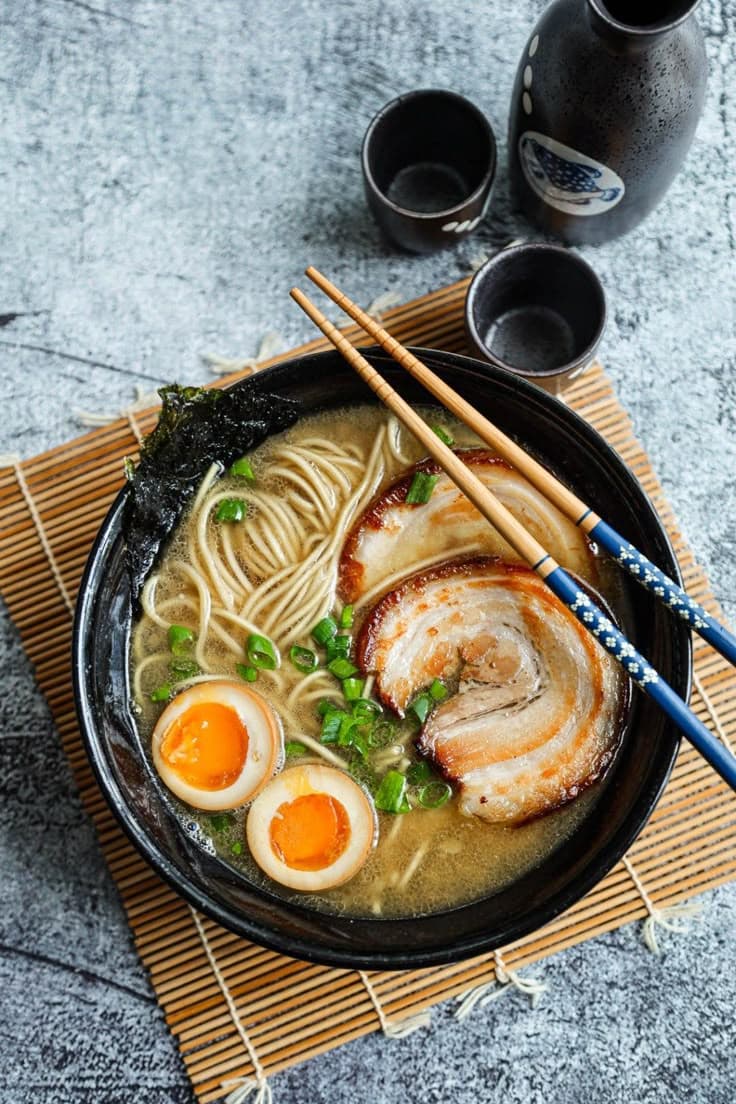
Montreal’s Chinatown is a neighborhood where food, immigration, history, and culture have been intertwined for generations. Today, the area is home to restaurants representing many different culinary traditions, and among them is Machiya Ramen, a small independent ramen restaurant located at 1023 Rue Clark.
Unlike a large ramen chain with a standardized international story, Machiya is an independent restaurant. Its identity is closely tied to its location in the heart of Montreal’s Chinatown and to the traditions behind Japanese ramen.
The name “Machiya” itself offers an interesting starting point.
What Does “Machiya” Mean?
The Japanese word Machiya (町家 or 町屋) traditionally refers to a type of urban townhouse found throughout Japan, particularly associated with historic cities such as Kyoto.
The word can be understood as a combination of machi, meaning town or neighborhood, and ya, referring to a house or building.
Historically, machiya were more than homes. They often combined commercial and residential functions, with a shop or workshop at the front and living space toward the back.
That combination of business and home reflects an older form of Japanese urban life, particularly among merchants and craftspeople.
It is an interesting name for a ramen restaurant because ramen itself has long been connected with everyday urban dining.
Ramen is not simply a ceremonial dish. It developed as accessible, affordable food that could become part of everyday life in busy cities.
From Japanese Noodles to Modern Ramen Culture
Ramen has a complicated history.
Although the modern Japanese ramen tradition developed in Japan, its early development was influenced by Chinese-style wheat noodles and the movement of people, ingredients, and culinary techniques between China and Japan.
During the twentieth century, ramen gradually developed into many regional styles across Japan.
Today, ramen can mean very different things depending on the region and the style of broth.
There is miso ramen from Hokkaido, shoyu ramen associated with Tokyo, Hakata-style tonkotsu ramen from Fukuoka, and many other regional interpretations.
Among these styles, tonkotsu has become one of the most internationally recognizable.
The Story Behind Tonkotsu Ramen
Tonkotsu means “pork bone.”
Unlike clear chicken or seafood broths, tonkotsu ramen is known for its rich, opaque appearance and deep savory character.
The broth is produced by cooking pork bones for an extended period. The combination of heat, time, fat, collagen, and bone marrow produces the creamy appearance associated with traditional tonkotsu broth.
One of the most famous stories in tonkotsu history comes from Kurume in Fukuoka Prefecture.
In 1937, the ramen shop Nankin Senryo is credited with developing an early form of tonkotsu broth after pork bones were accidentally left cooking for too long.
The resulting cloudy, milky broth became the foundation of a style that would later become strongly associated with Kyushu.
Tonkotsu eventually spread far beyond Fukuoka.
Today, it is one of the most recognizable ramen styles around the world.
The Broth Is the Heart of the Bowl
For a ramen restaurant, the broth is often the element that determines the personality of the bowl.
At Machiya Ramen, the restaurant’s positioning emphasizes its pork-bone broth and slow cooking process.
The available materials describe the shop as using 100% pork bones, preparing the broth daily, and emphasizing an approximately eight-hour cooking process.
The same materials also identify the restaurant's positioning around a no-MSG approach.
This is important because a bowl of tonkotsu ramen is not created simply by adding a flavoring powder to hot water.
The depth of the broth comes from the relationship between ingredients, heat, time, and preparation.
That makes the broth itself part of the restaurant's story.
Black Garlic Oil and Tonkotsu
One of the more distinctive directions associated with Machiya is its black garlic oil tonkotsu ramen.
Black garlic oil, often called mayu in Japanese ramen culture, is made by carefully cooking garlic until it develops a dark color and concentrated aroma.
When added to a rich pork-bone broth, the result is a combination of roasted garlic, bitterness, sweetness, and deep savory flavor.
The dark color can make the bowl visually striking, while the garlic oil adds another layer to the already rich tonkotsu base.
For diners who enjoy stronger flavors, this style of ramen offers a different experience from a traditional lighter shoyu or shio broth.
A Vegetarian Option in a Ramen Neighborhood
Another notable part of Machiya's positioning is its vegetarian ramen.
Ramen is often associated with pork-based broth, particularly when discussing tonkotsu.
Having a vegetarian option therefore allows people with different dietary preferences to experience the restaurant without requiring everyone at the table to order the same style of food.
It also reflects the broader evolution of ramen culture.
Modern ramen restaurants increasingly offer different broth styles and ingredients in response to changing dietary preferences and international audiences.
Machiya Ramen and Montreal’s Chinatown
The location of Machiya Ramen is particularly important.
The restaurant is located at 1023 Rue Clark, in the core of Montreal’s Chinatown, near the intersection of Clark Street and de la Gauchetière Street.
Sun Yat-Sen Park is nearby, while Saint-Laurent Boulevard runs along the neighborhood.
The restaurant is also within walking distance of Place-d'Armes metro station.
This makes Machiya part of a neighborhood that is already one of Montreal’s most recognizable cultural destinations.
For visitors, Chinatown is not simply a place to eat Chinese food.
It is a historic district shaped by immigration, commerce, architecture, community institutions, and decades of cultural change.
The History of Montreal’s Chinatown
Montreal’s Chinese community has a history stretching back more than a century.
The neighborhood developed around Saint-Laurent Boulevard and gradually became a center for Chinese Canadian businesses, restaurants, associations, and community life.
For generations, Chinatown served as an important commercial and social center for Chinese immigrants and their descendants.
The neighborhood also contains historic buildings and institutions that reflect this history.
In recent years, Montreal has increasingly recognized the cultural importance of Chinatown.
The core of Montreal’s Chinatown received heritage recognition from the Province of Quebec, reinforcing the idea that the neighborhood is not simply a commercial district but also an important part of the city’s cultural history.
At the same time, Chinatown continues to evolve.
New restaurants, businesses, cultural projects, and revitalization efforts are changing the neighborhood while preserving parts of its historic identity.
Machiya Ramen exists within that ongoing transformation.
Why Location Matters for a Ramen Restaurant
A ramen restaurant could theoretically open anywhere in Montreal.
But opening in Chinatown creates a different relationship with the surrounding neighborhood.
Visitors already come to the area specifically to explore food and culture.
Tourists walk through the historic streets, visit Sun Yat-Sen Park, explore nearby Old Montreal, and travel through the downtown core.
Local residents also use Chinatown as part of their everyday dining landscape.
That creates an unusual opportunity for a Japanese ramen restaurant.
Machiya does not have to erase the neighborhood around it.
Instead, it becomes another layer of Asian food culture within a district already shaped by generations of Asian Canadian history.
Montreal Has Developed a Serious Ramen Scene
Montreal has become a strong city for ramen.
The city now has restaurants specializing in tonkotsu, miso, shoyu, vegetarian ramen, and other regional styles.
Tourisme Montréal has even highlighted ramen as part of the city’s food culture.
Machiya operates within this competitive environment, but its strongest positioning is not necessarily trying to claim the title of “the best ramen in Montreal.”
A more natural identity is geographic and cultural:
a bowl of ramen in the heart of Chinatown.
That distinction matters.
Montreal is a large city with many ramen restaurants.
Chinatown, however, is a much more specific place.
For visitors searching for Japanese ramen near Chinatown, Clark Street, Old Montreal, Place-d'Armes, or downtown Montreal, location becomes part of the restaurant's identity.
A Small Restaurant in a Historic Neighborhood
There is something fitting about a small independent ramen restaurant operating in an old urban neighborhood.
The word Machiya historically describes a building where commerce and everyday life existed together.
Montreal’s Chinatown has a similar relationship with daily life.
It is a neighborhood where restaurants, shops, apartments, community organizations, tourists, workers, and residents share the same streets.
In that sense, Machiya Ramen fits naturally into the rhythm of the district.
A bowl of ramen can be a quick meal before exploring downtown.
It can be a warm dinner after walking through Chinatown.
It can be part of a food-focused visit to Montreal.
Or it can simply be another neighborhood restaurant for people who live and work nearby.
The Future of Chinatown and the Future of Machiya
Montreal’s Chinatown is currently going through another period of change.
Revitalization plans, heritage protection, new businesses, and community initiatives are shaping the neighborhood’s next chapter.
That makes the location especially interesting for independent restaurants.
As Chinatown continues to evolve, restaurants become part of the way people experience the neighborhood.
Machiya Ramen is therefore more than a restaurant serving noodles.
It is part of a changing urban food scene where Japanese ramen, Chinese Canadian history, tourism, local dining, and Montreal’s broader multicultural identity meet in the same few blocks.
One Bowl, One Neighborhood, Many Histories
Ramen has traveled a long way.
Its story connects Chinese noodle traditions, Japanese urban food culture, regional Japanese cooking, and modern international dining.
Tonkotsu ramen carries its own history, from Kyushu to ramen shops around the world.
And Machiya Ramen brings that tradition into one of Montreal’s most historically significant neighborhoods.
Located on Clark Street in Chinatown, the restaurant offers diners a chance to experience Japanese-style ramen while exploring a district shaped by generations of migration and commerce.
The story of Machiya is still being written.
What is already clear is its place: a ramen restaurant in the heart of Montreal’s Chinatown, serving a cuisine with deep roots while becoming part of the neighborhood's modern food culture.
Visit Machiya Ramen in Montreal Chinatown
If you are exploring Montreal’s Chinatown and looking for Japanese ramen near Clark Street, Place-d'Armes, Old Montreal, or downtown Montreal, Machiya Ramen is located at 1023 Rue Clark, Montréal, QC H2Z 1K1.
You can learn more about the restaurant and its location here:
Keep reading
Order from
Montréal, QC · Japanese Ramen · Donburi · Gyoza