
Why West Hartford’s New Park Avenue Is Becoming an Interesting Place to Eat
New Park Avenue in West Hartford is evolving from an area shaped by industry into a more diverse neighborhood combining housing, transportation, retail, design businesses, and restaurants. This article explores the history of Elmwood and New Park Avenue and how the area’s development is influencing its dining scene. It introduces Sichuan Alley Bistro, a modern Sichuan restaurant inspired by the food culture of Chengdu’s historic alleyways. With dishes such as Mapo Tofu and chili chicken, along with contemporary cocktails and a modern dining space, the restaurant adds another layer to West Hartford’s changing local food culture.
A neighborhood can change without changing its street signs.
The buildings may remain recognizable, but the businesses inside them evolve. Old industrial spaces become apartments. Former factories become creative businesses. Streets that once served mainly commuters begin attracting people who want to shop, eat, meet friends, and spend an evening.
That is exactly the kind of transition happening around New Park Avenue in West Hartford.
And it helps explain why a modern Sichuan restaurant makes sense in this part of town.
From Industrial Corridor to Mixed-Use Neighborhood
West Hartford has a long history.
The area was established as an agricultural parish in the late 17th century and later developed into a town with mills, manufacturing, and other industries.
It is also known as the birthplace of Noah Webster, the man associated with the famous American dictionary.
But the story of West Hartford today is very different from its early agricultural history.
One of the more interesting examples is Elmwood and the New Park Avenue corridor.
During World War II, Elmwood became home to Elmwood Acres, a federally supported housing development built for defense-industry workers and their families.
Its location near the railroad made it practical for workers commuting into Hartford.
Over time, the area developed a distinct working-class identity and became one of the more diverse parts of West Hartford.
Today, that identity is changing again.
New Park Avenue Is Being Reimagined
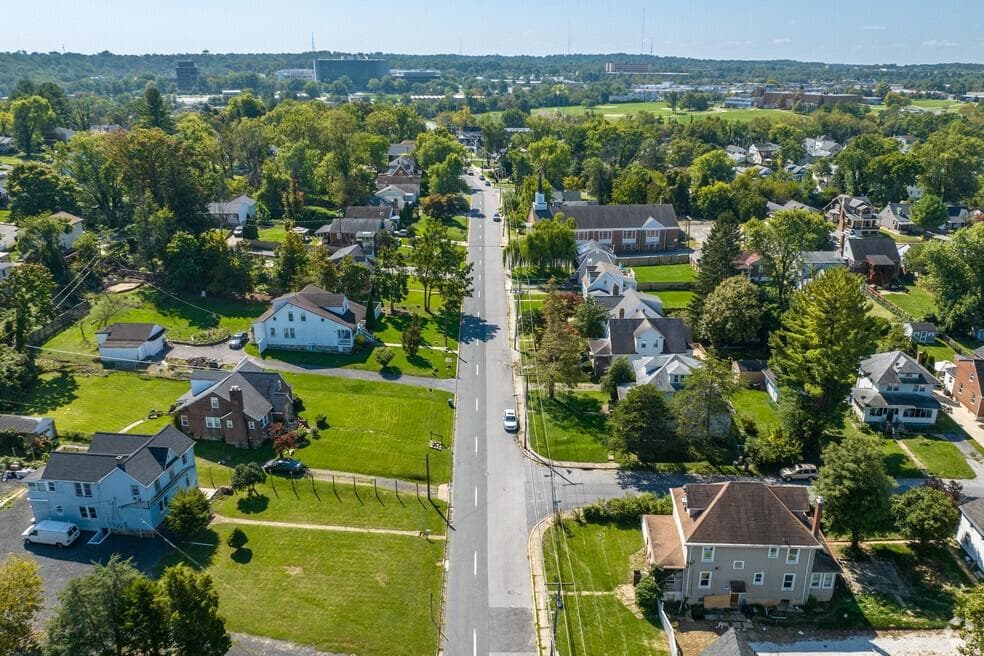
New Park Avenue was historically associated with manufacturing and industrial activity.
But the corridor is increasingly becoming a mixed-use and design-oriented area.
In 2022, West Hartford approved a transit-oriented development zone around the Flatbush Avenue and Elmwood CTfastrak stations.
New residential projects are adding housing to the corridor.
Street improvements are also changing how people move through the area, including bicycle infrastructure and connections between the Elmwood CTfastrak station and nearby trails.
At the same time, New Park Avenue has developed a cluster of home-related businesses and design services that has earned the informal description “Home Design District.”
That combination is important.
A neighborhood with commuters, new residents, local families, design-oriented consumers, and people visiting businesses during the day naturally creates demand for a different type of restaurant.
Not every dinner needs to be fast takeout.
Sometimes people want somewhere to sit.
Sometimes they want a cocktail.
Sometimes they want to share several dishes with friends.
Enter Sichuan Alley Bistro
Sichuan Alley Bistro opened in West Hartford in fall 2024 at 625 New Park Avenue.
The restaurant is the first U.S. location of a brand founded in Singapore in 2016.
The concept is inspired by the food culture of Chengdu's historic alleys, where narrow lanes were not simply places to pass through but also places where people gathered to eat and socialize.
The West Hartford restaurant takes that idea and gives it a contemporary setting.
The interior draws inspiration from modern restaurants in Hong Kong and Shanghai, with soft lighting and different seating arrangements, including communal tables.
That makes the restaurant particularly compatible with the direction New Park Avenue is taking.
Sichuan Food Doesn't Have to Mean “As Spicy as Possible”
One of the restaurant's most interesting ideas is also one of the easiest to misunderstand.
Sichuan food is often reduced outside China to one word:
spicy.
But Sichuan cuisine has a much broader range of flavors.
Sichuan Alley emphasizes three flavor directions in particular:
numbing, sweet-and-sour, and fish-fragrant.
Heat is only one part of the equation.
That approach shows up throughout the menu.
Mapo Tofu brings together tofu, minced meat, chili oil, and Sichuan pepper.
Fish Slices with Pickled Vegetables use a different balance of acidity and savory flavors.
Yu Xiang Pork represents the famous fish-fragrant flavor profile without actually requiring fish to create that taste.
And then there is the dish that has probably become the restaurant's most recognizable visual:
Find the Chicken in the Chilies.
The dish places fried pieces of chicken and cashews underneath a large pile of dried chilies and Sichuan peppercorns.
It looks dramatic when it arrives at the table.
But the visual presentation is not the whole point.
It also illustrates how Sichuan cuisine can combine aroma, texture, spice, and numbing sensations rather than relying only on heat.
A Restaurant Designed for More Than Dinner
Sichuan Alley is also different from a typical neighborhood Chinese takeout restaurant.
The restaurant has a full bar program.
Its drinks include cocktails, martinis, mojitos, margaritas, wine, sake, beer, and specialty drinks.
Some cocktails even play with the restaurant's Chinese and Sichuan identity.
There is a Kung Fu Panda cocktail made with vodka, green tea, cucumber, and chili.
There is also a Godfather of Szechuan combining bourbon, amaretto, and baijiu.
That makes the restaurant a different kind of destination.
It can be a place for dinner, but it can also be a place to meet friends after work, share appetizers, or have a drink before heading home.
That is increasingly relevant in a neighborhood where transportation, housing, retail, and dining are becoming more connected.
Modern Sichuan in a Diverse Neighborhood
Elmwood has long been one of West Hartford's more diverse communities.
Its identity was shaped by workers, immigrants, families, transportation, and the relationship between the neighborhood and Hartford.
That history makes it a natural place for food from different parts of the world.
A modern Sichuan restaurant does not have to replace the neighborhood's existing food culture.
It adds another layer to it.
Someone may arrive for ramen.
Someone else may order a vegan dish.
Another person may want a cocktail.
A group might share dumplings, mapo tofu, chili chicken, and a few drinks.
The restaurant's menu reflects that flexibility.
There are dedicated vegan and gluten-free menus, a range of noodle and rice dishes, appetizers, cold dishes, signature Sichuan dishes, desserts, bubble tea, and a large beverage program.
In total, the menu contains more than 160 items.
Why This Kind of Restaurant Fits New Park Avenue
The interesting thing about Sichuan Alley is not simply that it serves Sichuan food.
It is that its business model matches the direction of the neighborhood around it.
New Park Avenue is moving toward a more mixed environment where people can live, commute, shop, work, and spend leisure time in the same general corridor.
A restaurant with contemporary design, shared plates, a bar, outdoor seating, vegan and gluten-free options, and a menu built around a cuisine with a strong identity fits naturally into that environment.
It gives people another reason to stay in the neighborhood after business hours.
And that is often how restaurant districts develop.
One restaurant does not transform a street.
But restaurants become part of the larger ecosystem of housing, transportation, retail, and community life.
A New Chapter for an Old Corridor
New Park Avenue has already gone through several versions of itself.
The corridor once served industry.
Then parts of it declined.
Now redevelopment, transit-oriented planning, new housing, design businesses, and restaurants are giving it another identity.
Sichuan Alley Bistro is one small part of that larger change.
Its story connects Singapore, Chengdu, modern Chinese restaurant design, and West Hartford.
But the most important part of the story may be local.
A restaurant that arrived in West Hartford in 2024 is now becoming part of a neighborhood that has been changing for decades.
That is what makes exploring the food scene around New Park Avenue interesting.
You are not simply finding a new restaurant.
You are watching a neighborhood develop a new identity.
Visit Sichuan Alley Bistro
For the menu, location, restaurant information, and current dining options:
Sichuan Alley Bistro — West Hartford, Connecticuthttps://sichuanalley.hiraccoon.com
Keep reading
Order from
West Hartford, CT · Chinese · Szechuan · Chengdu Street Food